For those of us seeking a more purposeful, more self-determined way of life (without tradwife trappings), America's "contrary farmer" has some suggestions.
There’s a particular kind of stubbornness that Vermont respects; indeed, it’s not just respected - it’s almost a requirement for surviving here (or at least for thriving). It’s not the ornery, dug-in kind of stubbornness that mistakes rigidity for principle, but the quieter kind: the kind that looks at a culture organized around bigness, speed, scale, and “maxxing” and says actually, no…then goes back to weeding the garlic.
Though not a Vermonter, the late Gene Logsdon had that stubbornness in spades. He lovingly stewarded a “cottage farm” in Ohio for most of his adult life, wrote something like two dozen books about it, and spent roughly fifty years being politely ignored by the agricultural mainstream while being beloved by droves of folks who were actually paying attention to what American farms and farmers need. Wendell Berry once called him “the most experienced and best observer of agriculture we have”.
And Wendell Berry would know. Gene was friends with Wendell, which tells you something about his sensibility. But where Berry can tip toward the elegiac, Logsdon stays unselfconsciously grounded, and he is not above a good manure joke. He writes the way your sharpest rural neighbor talks - generously, sometimes a bit sidelong, rooted in a strong sense of place, always helpful, never self-important, and with a humor that doesn’t need to announce itself. He’s the agrarian writer you’d want across the table when you’re genuinely trying to think something through - not just be reassured that you’re on the right side of it.
Gene died in 2016. His last book - Letter to a Young Farmer: How to Live Richly Without Wealth on the New Garden Farm - reads as a love letter to a mentality and approach that hadn't quite arrived in mainstream agricultural consciousness yet - one that is still unfolding. In its own way, it is also a document containing a version of lifeways that were practiced on this continent for thousands of years before European farming culture decided they were worth paying attention to (community agriculture, polyculture, mutual aid, multi-generational land stewardship, integrating wildlife, anti-extractive practices…i.e., Indigenous wisdom, though Logsdon acknowledges it as such mostly indirectly).
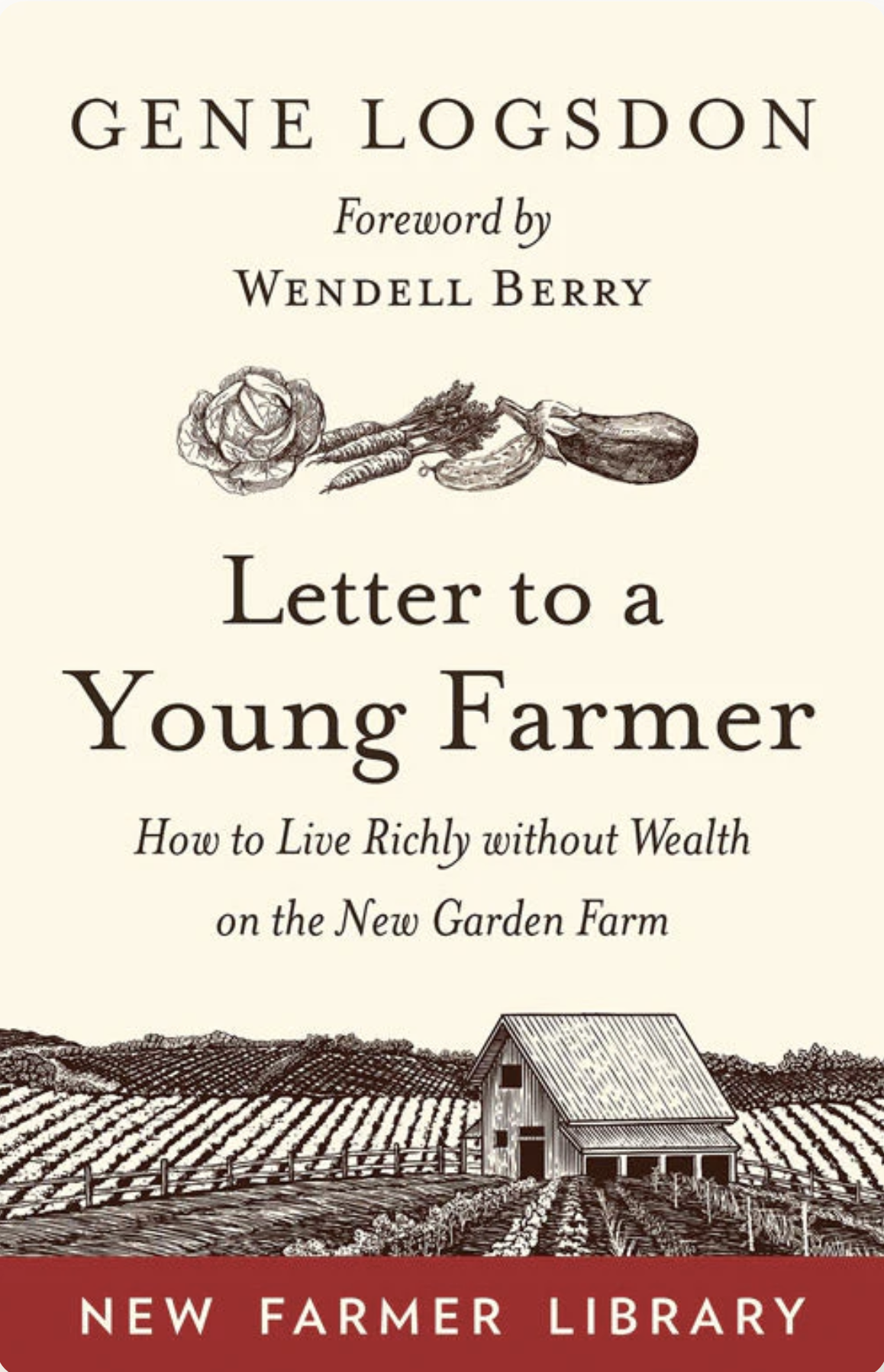
What strikes me most about this book is that Gene isn’t writing a how-to here. Sure, he has things to say about row spacing and cover crops and the particular merits of the Jersey cow, but that’s not really the point of Letter - it’s more of a why-to. This book is a kind of permission slip: a poetic, humorous, patient argument that the life of meaning and self-determination you’re building from the soil up is legitimate. He almost seems to be reaching from the pages and saying, “It doesn’t matter if you’ve only just started. It doesn’t matter if you’re sneaking in some tomato plants around the edges of the life you accidentally ended up in. What you’re doing isn’t a retreat from the ‘real’ economy or the ‘real’ world. It’s not a romantic delusion, or a passing phase, or a naïve hobby dressed up as a philosophy. The life you’re longing for is, in fact, a different - and better - answer to a question that America has been asking wrong for at least a century. And that answer is vital.”
This profound feeling is a big part of why I’ve chosen Letter to a Young Farmer as the inaugural Agrarian Book Club selection for ACRE (Agrarian Co-Learning & Resiliency Exchange). But I want to name something else about why this book and why right now, because I think it’s worth being honest with y’all about the particular exhaustion and unmoored-ness that I am feeling in this moment (and I know I’m not alone in this feeling).
Land is expensive. Grain is expensive. Compost is expensive. Groceries are expensive. Gas is expensive. Energy is expensive. Housing is expensive. Healthcare is expensive. If you’re farming or homesteading or even just trying to grow a meaningful portion of your own food while staying more or less functional as a human, you are doing that against a very real economic headwind - and the people who are in positions to change that are mostly not interested in doing so. The market’s judgment of small-scale agrarian life is pretty consistent: we’re insufficiently scalable and immune to rapid development, and indeed do not want either of these things. Therefore, we are both backwards and dispensable - worthy of derision, even. Take our healthcare; take our land; take our homes; take our easy sleep; take our retirement; take our full bellies; take our dignity - we have chosen a life that cares more about the soul of the land than its liquid value, so surely we have chosen existential and financial fragility…right? When I worked in tech for a couple of years, I was richly rewarded for supplicating myself to all things fast, slick, extractive, and infinitely scaleable. Now that I have chosen to tend a slow, textured, regenerative, small way of life that gives so much back to the land and to my community, we do hard math at the end of each month to see if we can afford to continue making this heartfelt choice.
But this financial pressure - as hard as it is to bear - is the easier part to name. To me, there’s something lonelier and more heartbreaking lurking underneath the crushing weight of our farmstead mortgage and the tenuous feeling of working the land (a relatively dangerous calling) without health insurance. This is a fear - a constant unease - for which I have no name. It’s the reason I wake hours before my alarm some mornings, chug off-brand antacid by the light of the moon, and stare out the window at the high tunnel before returning to lie awake in bed. It is the feeling of trying to build something - something with roots, something with a future, something that might actually matter to people after we’re gone - inside a culture that keeps trying to redirect our attention toward things that evaporate, or that we don’t actually own and can’t actually touch to begin with. Each day, my attention is siphoned toward “content”. Toward metrics. Toward a hundred small notifications. Toward subscriptions that get more expensive each year. Toward clients who I genuinely love but who will never once think about our soil or the community it helps feed. A lot of us got into this life, or are dreaming of getting into it, because we decided that we wanted to build something that belonged to us, to the land, to our community, and maybe to our kids…not to a bunch of C-suite assholes and certainly not to AcreTrader or Palantir. And some days - most days, if I’m honest - it’s impossible not to feel like the whole of modern life is organized to make this choice feel hopelessly naïve.
Logsdon felt this tension in 1970, and 1995, and 2016. He never stopped farming and he never stopped writing and he never stopped making the case (with considerable good humor and very little sentimentality) that a life organized around real things - things you can eat and touch and grow and share and pass down to the next generation - is not a consolation prize. It is a necessity for our emotional, social, and literal survival.
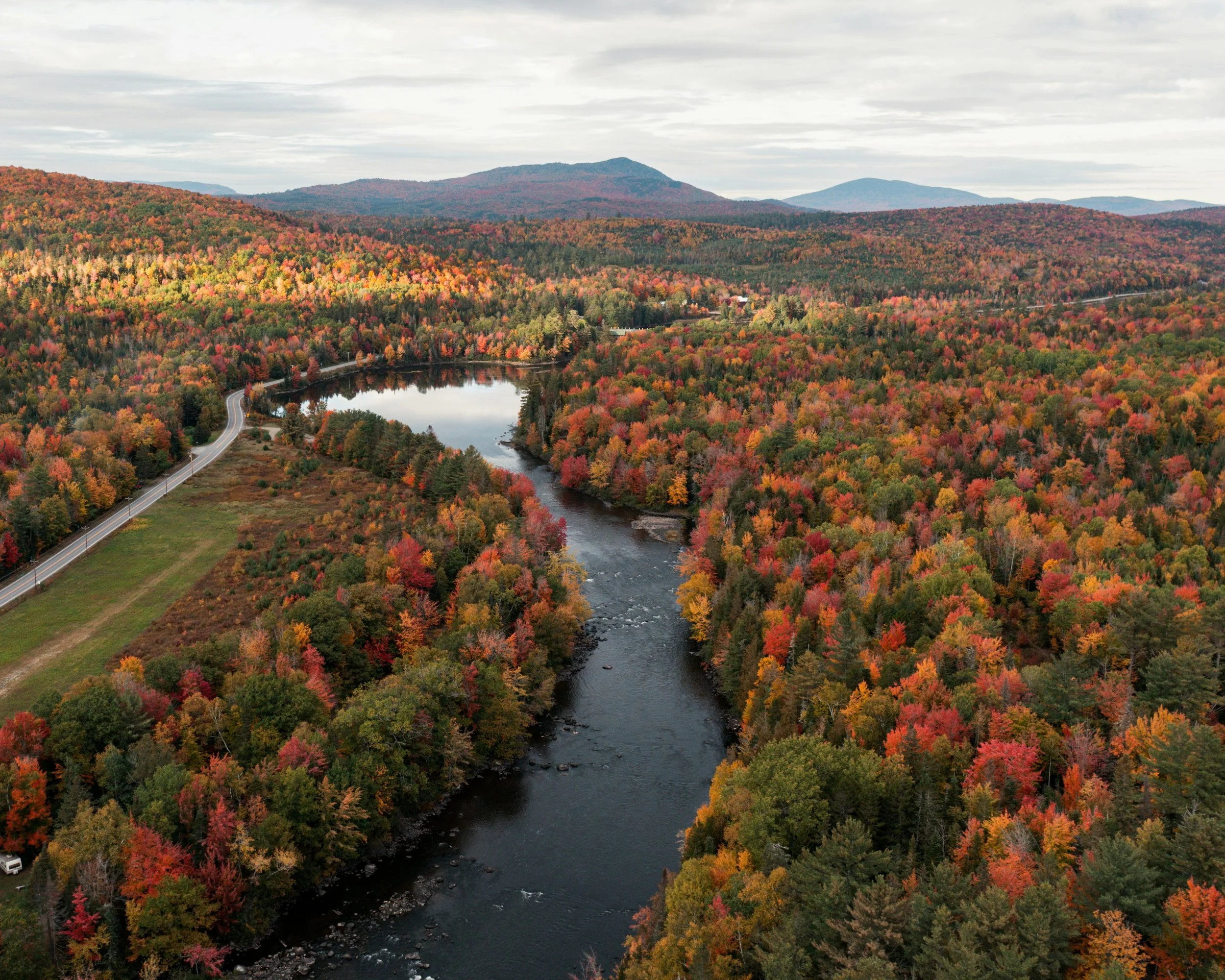
That feeling is the reason I fled the South and moved to Vermont in 2022. Vermont often (and rightly) gets held up as a model for something the rest of the country is groping toward, even if they can’t name it. I couldn’t name it but I knew where I could find it, and I wanted to be part of it. Gene would have loved it. Vermont culture is grounded - in the direct democracy of town meetings; in local food systems where “farm to table” isn’t just marketing talk; in being kind even when we’re not nice; in thoughtfulness that extends to friends and strangers alike; in a stubborn attachment to grit and love and loons and poetry and sunsets and art and snow and human scale. I don’t think these things are secrets that Vermont has been keeping so much as a set of habits that were shaped by the 18th-century land and seasons and never fully abandoned. It turns out that when you don’t abandon good habits and worthy devotions over several generations, the result starts to look like visionary culture to outsiders. Logsdon would recognize the Vermont instinct immediately. He’d also be quick to say, correctly, that Vermont has no monopoly on it - that this capacity exists in a lot of places, waiting for someone to decide it’s worth planting & tending.
This capacity and this tending is why I want to read this book with you.
Let us share a rich, unhurried literary meandering that moves us through and toward the kind of life we dream of.
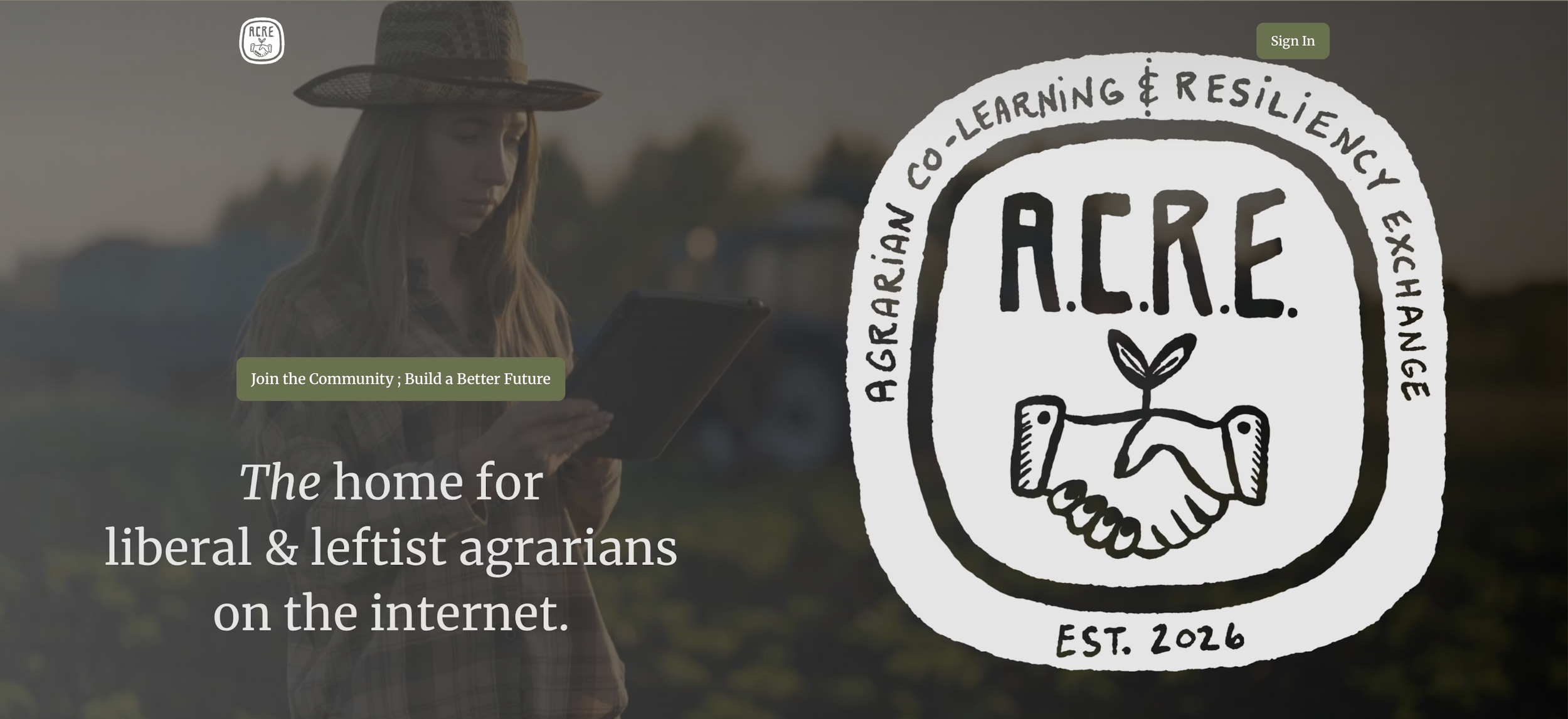
For those newer to this newsletter: ACRE (Agrarian Co-Learning and Resiliency Exchange) is a community I’ve been building for people who are doing this kind of land-based work - or dreaming seriously about it - and who are also, not coincidentally, firmly on the left side of the political map. It exists partly because the agrarian internet has a tradwife problem, and partly because mutual aid and genuine co-learning should be at the center of this kind of life (not just its aesthetic backdrop). The people I know who are doing this work are figuring out how to make everything from a single garden bed to a thousand acres work as something more than a dream - and they are mostly not seeing themselves (their values, their race or ethnicity, their gender or sexuality, their politics, their hopes for the world) reflected anywhere online. ACRE is an attempt to fix that.
So - the inaugural Agrarian Book Club selection is Letter to a Young Farmer, and we’re going to read it together in a way that I think is genuinely suited to this season and this community. The book is structured as a foreword, a preface, and 25 essays - each one self-contained and readable in a single sitting. On Sunday May 3rd, we’ll kick off with group introductions, then read the foreword and preface together, and talk about how we’re feeling in this moment. After that, we’re reading one essay per week and meeting online over beverages to discuss the reading each Sunday morning. This pace gets us through to mid-October - strolling right alongside the busy season of planting, tending, harvesting, and fall farm chores - rather than competing with the calendar. If thirty minutes a week to read something that is actually good for your brain and your spirit sounds manageable, awesome - because that’s all this asks of you.
We also have a free PDF of the book available, shared openly by a European publishing organization that had the good sense to make it accessible. You don’t need to buy anything to participate except your $5/month or $50/year ACRE membership (after a free 2-week trial). You just need to show up, enjoy some agrarian fellowship, and feel some life-affirming literary vibes on Sunday mornings.
Now, for those of you thinking “I want less social media, not more”, let me say this: I know the “ugh, one more platform” concern is real - I feel it deeply - so I’m not going to perform my way around it. What I’ll say honestly is that ACRE is designed to be low-pressure, low-noise, high-value, high-joy, and substantive when you have the bandwidth to engage. The Book Club is specifically a good entry point if you’ve been curious about the community but weren’t sure whether it was the right moment to join - a book of essays is a natural on-ramp because the terms of engagement are clear, the pace is easy and set in advance, and you’re not walking into a room mid-conversation trying to figure out where to stand. As an autistic person, joining a new community and not having an engagement structure sounds like my own personal idea of hell, so rest assured that Agrarian Book Club is a mentally, emotionally, and socially safe space. You can think of this as your zero-pressure entry point into a worldwide network of likeminded agrarian friends ready to share, teach, learn, connect, commiserate, uplift, and celebrate.
Logsdon spent his whole career arguing that unhurried is not the same as unproductive and that the best things are built slowly, in a dedicated place, by people who’ve decided those things are worth savoring. Our Agrarian Book Club (and ACRE itself) is an attempt to practice that. One essay, one week, coffee and tea in hand, alongside future best friends who are grappling with the same questions, needs, and desires from their own small piece of ground.
If that sounds like what you need right now, we’d love to have you.
The link to ACRE is here…and I hope to see you there.